Boxed Group Ordering: Designing for Collaborative E-Commerce
Group Ordering represents one of the most complex, multi-user features in the Boxed ecosystem. Given the focus on bulk-sized goods, we recognized a high-intent opportunity to facilitate shared shopping across households and offices. I led the end-to-end design of a responsive web and iOS experience that balanced the distinct needs of "Admins" and "Shoppers." By solving for real-time collaboration and complex cart logic, we created a seamless way for multiple users to participate in a single transaction, directly aligning the product experience with the communal nature of bulk purchasing.This project was featured on Product Hunt.


Navigating Complexity Through Scenario-Based Design
To architect a feature as intricate as Group Ordering, my team moved beyond static personas to deep storyboarding and comprehensive user flow mapping. We utilized high-fidelity scenarios to account for a vast array of edge cases and state changes—ranging from invitation workflows and abandoned carts to administrative cancellations and large-scale office procurement. This rigorous documentation allowed us to align on every possible outcome, ensuring a seamless experience for both individual shoppers and bulk-order administrators across every touchpoint of the lifecycle.


During the early sketching phase, we translated complex user scenarios into detailed logic maps to identify potential friction points before they reached high-fidelity design. By accounting for technical constraints and user pain points at the onset, we were able to architect a resilient experience that preemptively answered critical edge-case questions. This "logic-first" approach ensured that our final designs were not only visually cohesive but also functionally robust, reducing late-stage pivoting and aligning the team on a clear execution path.


To ensure full alignment across engineering and product teams, we developed an extensive suite of wireframes that mapped the entire multi-user journey. This process required a dual-track design approach: architecting entirely new UI patterns; including specialized modals, real-time notifications, and persistent permalink pages while simultaneously augmenting existing core features. By systematically updating the cart, checkout, and order history, we successfully integrated complex group logic into the established user experience without compromising the platform’s foundational simplicity.

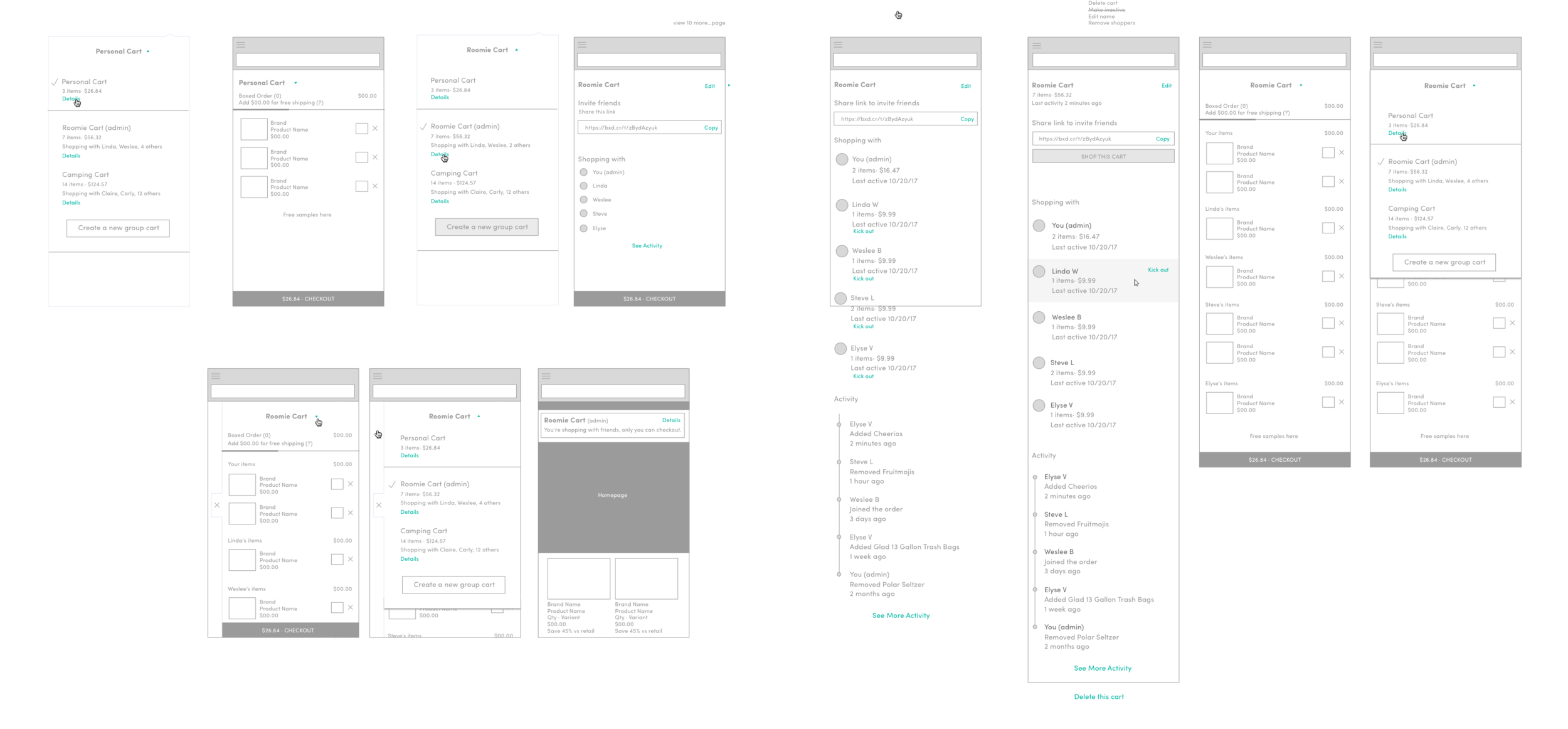


To ensure a seamless transition between personal and group shopping, we prioritized a distinct visual hierarchy that provided immediate contextual awareness. The primary challenge was to design a "Group Mode" that was unmistakable enough to prevent user confusion, yet cohesive enough to feel like a natural extension of our established style guides. By introducing specific iconography, persistent status indicators, and subtle color-way shifts, we created a clear mental model for the user, ensuring they always felt grounded in their current shopping state without disrupting the brand’s familiar aesthetic.

To validate this first-of-its-kind feature, we executed a multi-phased testing strategy using high-fidelity prototypes. Because collaborative bulk shopping was a novel concept for most users, we conducted internal "dogfooding" sessions within the Boxed headquarters alongside external testing with both new and returning customers. This rigorous feedback loop allowed us to identify unique friction points early; each testing cycle directly informed the next design iteration, resulting in a highly refined, intuitive experience that successfully onboarded users to an entirely new mental model for e-commerce.


To ensure a friction-free experience for every participant, we developed comprehensive storyboards for each primary user role: the Organizer (Admin) and the Contributor (Shopper). By mapping divergent user paths and potential friction points, we were able to architect a robust system that accounted for a vast array of outcomes. This scenario-based planning allowed us to preemptively solve for complex state changes (such as real-time cart syncing, permission hand-offs, and multi-user checkout logic) ensuring a cohesive experience regardless of the user's entry point or role.


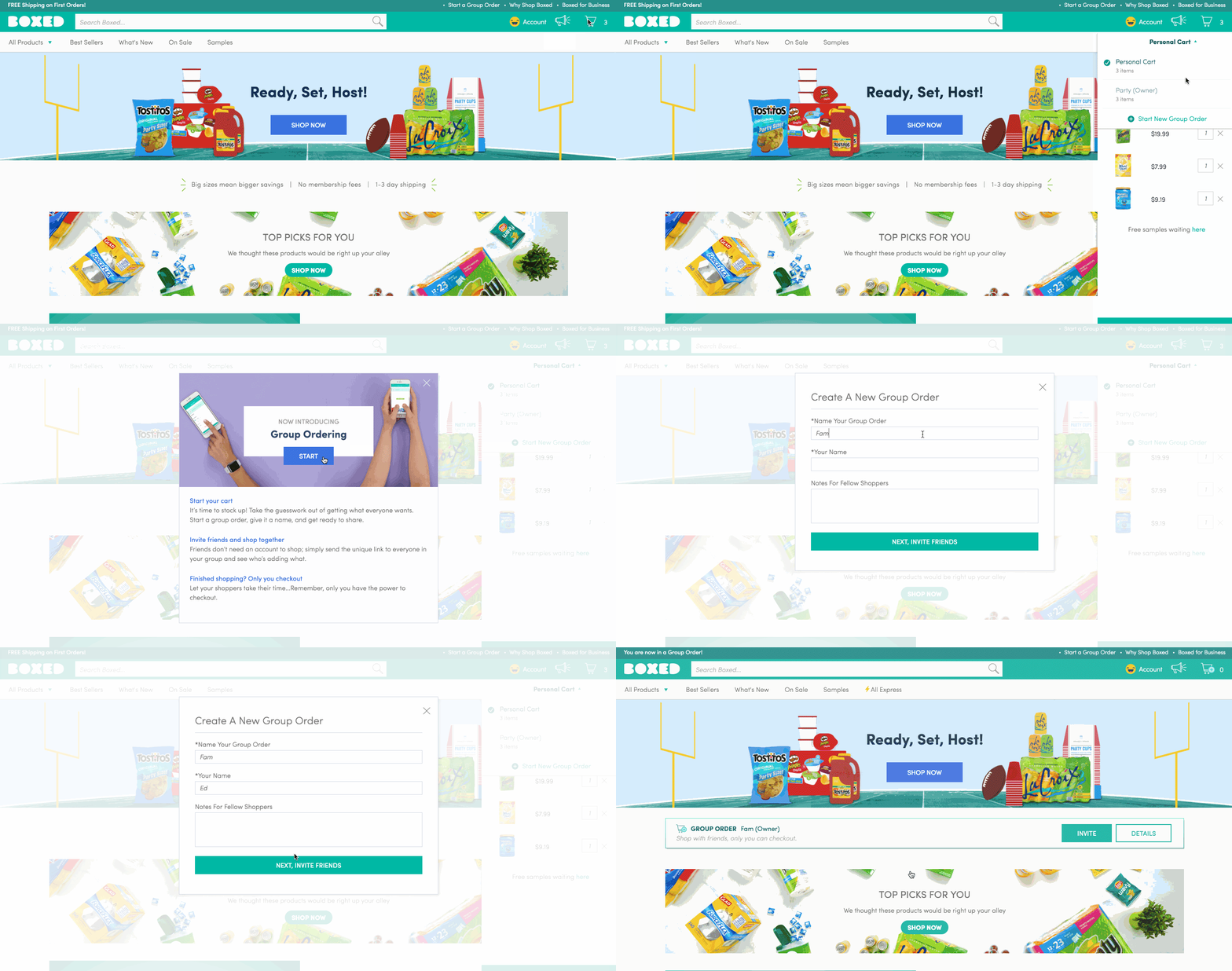
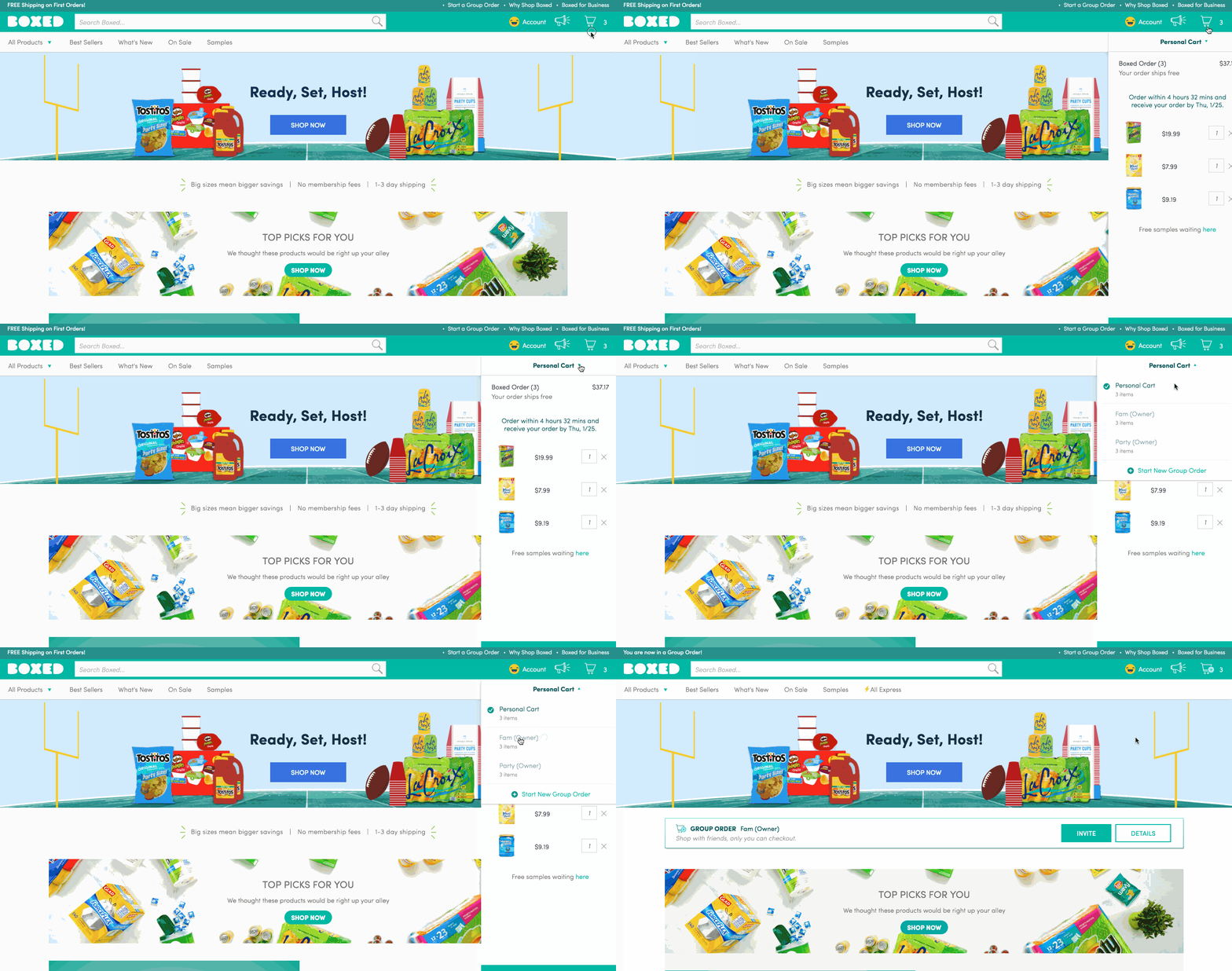
The final result
Want to see more from Boxed?


Quisque iaculis facilisis lacinia. Mauris euismod pellentesque tellus sit amet mollis.